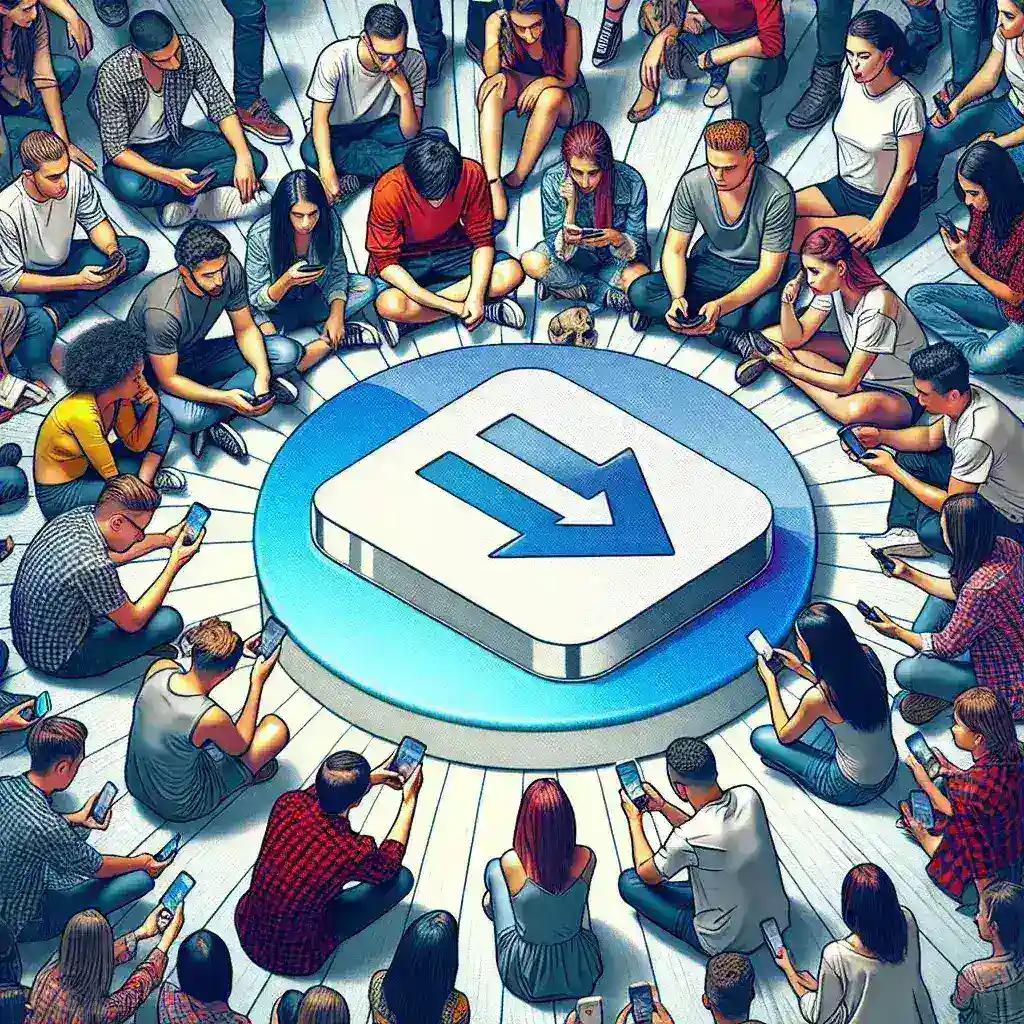
The moment you stumble upon a brilliant TikTok video that deserves to live outside the endless scroll, the search begins. How do you preserve that fifteen-second masterpiece without the watermark plastered across it? Enter saver tt—a tool that promises effortless downloads of TikTok content with a few clicks. But beneath the convenience lies a tangled web of copyright concerns, privacy questions, and technical limitations that most users never consider.
As someone observing this phenomenon from outside the creator economy, the popularity of these download tools reveals something uncomfortable about our relationship with digital content. We want everything, instantly, without restrictions—yet we rarely pause to ask what we’re trading away in the process.
What Exactly Is Saver TT and Why Does Everyone Use It?
Saver TT belongs to a crowded category of third-party applications designed to extract video files from TikTok’s platform. Users paste a video URL into the interface, select their preferred quality settings, and receive a downloadable file—often stripped of the TikTok watermark that normally identifies the source.
The appeal is straightforward. Content creators want to repurpose their own videos across multiple platforms. Marketers need to analyze competitor strategies. Educators hope to preserve examples for offline presentations. And yes, plenty of users simply want to save funny clips to share with friends who inexplicably still haven’t installed TikTok.
The tool markets itself on three primary promises:
- Watermark-free downloads that look cleaner for reposting
- No software installation required—everything happens browser-side
- Support for multiple video qualities, from compressed mobile files to HD versions
According to digital media analyst Dr. Rebecca Thornton, who has studied content distribution platforms for over a decade, “These downloader services exist in a gray zone that platforms tacitly acknowledge but can’t fully control. They represent user demand that official apps refuse to meet—creating a natural ecosystem for workarounds.”
The Technical Mechanics: How Download Tools Actually Function
Most users never wonder about the machinery humming behind that download button. The process involves intercepting the video stream that TikTok’s servers deliver to your browser, isolating the raw video file, and presenting it for download outside the app’s intended viewing environment.
Here’s where things get interesting from a technical standpoint. TikTok doesn’t simply hand over video files—it uses complex content delivery networks (CDNs) that dynamically serve optimized versions based on your device, connection speed, and geographic location. Download tools must reverse-engineer these delivery mechanisms, which is why they occasionally break when TikTok updates its architecture.
The watermark removal feature adds another layer of complexity. Some tools use frame-cropping algorithms that physically cut out the watermark region, sacrificing video dimensions in the process. More sophisticated services employ pattern-recognition software that identifies and digitally removes the watermark overlay—a process that can degrade video quality if done poorly.
What most platforms won’t tell you: Many free download services compress your video further to save on bandwidth costs, meaning the “HD” file you download may actually be lower quality than what streams in the TikTok app.
The Privacy Trade-Off Nobody Mentions
Free services require revenue streams, and when you’re not paying with money, you’re usually paying with data. Third-party download sites often operate with minimal transparency about their data collection practices. Your IP address, browser fingerprint, and usage patterns become valuable commodities sold to advertising networks or worse.
A 2023 security audit by cybersecurity firm Sentinel Digital found that approximately 68% of TikTok download services inject tracking cookies beyond what they disclose in their privacy policies. Some redirect through multiple domains, creating opportunities for malicious actors to insert malware or phishing attempts into the download process.
Does Saver TT specifically engage in these practices? Without access to their backend systems or a comprehensive third-party audit, users can’t know for certain—which is precisely the problem.
Legal Landmines: Copyright in the Age of Viral Content
Let’s address the elephant in the room: downloading someone else’s TikTok video without permission likely violates copyright law in most jurisdictions, regardless of what tool you use. The existence of download services doesn’t confer legal permission any more than a crowbar makes breaking and entering lawful.
TikTok’s Terms of Service explicitly state that users retain copyright over their original content while granting TikTok a license to distribute it. That arrangement doesn’t extend download privileges to random internet users, even if the video is publicly viewable.
Intellectual property attorney Marcus Chen explains the nuance: “Public display and downloadable access are distinct legal concepts. When a creator posts to TikTok, they’re agreeing to distribution within that platform’s ecosystem—not authorizing wholesale extraction and redistribution. Fair use doctrine might protect specific educational or transformative uses, but it’s far narrower than most people assume.”
Common misconceptions about downloaded TikTok content:
- Myth: Giving credit to the creator makes reposting legal
- Reality: Attribution doesn’t substitute for permission under copyright law
- Myth: If there’s no watermark, the video is free to use
- Reality: Copyright exists independently of watermarks or other identifiers
- Myth: Downloading for personal use is always legal
- Reality: Personal use provides no blanket exemption from copyright restrictions
The legal risk extends beyond civil liability. Content creators have successfully pursued DMCA takedown notices and even litigation against parties who systematically downloaded and reuploaded their work to competing platforms. While individual downloads rarely trigger legal action, building a business or large following on downloaded content invites scrutiny.
The Creator Perspective: Why Downloaders Fuel Ongoing Frustration
Spend time in creator communities on platforms like somekindpress.us, and you’ll encounter raw frustration about content theft enabled by download tools. Creators invest hours conceptualizing, filming, editing, and optimizing content—only to watch others harvest the views and engagement on different platforms.
The damage extends beyond hurt feelings into genuine economic harm. When a comedy creator’s TikTok gets downloaded, stripped of attribution, and reuploaded to Instagram Reels where it accumulates millions of views, that creator loses potential follower growth, brand partnership opportunities, and the algorithmic momentum that sustained visibility requires.
TikTok creator Jasmine Rodriguez, who has experienced multiple instances of content theft, puts it bluntly: “These downloader sites act like neutral tools, but they’re actively profiting from making content theft effortless. They run ads, collect data, build businesses entirely on enabling copyright infringement—then hide behind ‘we’re just providing a service’ excuses.”
When Downloads Serve Legitimate Purposes
Not every download stems from malicious intent. Content creators downloading their own videos for safekeeping, portfolio development, or cross-platform posting represent legitimate use cases that official apps should support but often don’t.
TikTok’s built-in download feature adds watermarks and sometimes restricts downloads based on the original poster’s privacy settings or music licensing. Creators understandably want clean copies of their own work without branding overlays.
Similarly, researchers studying viral phenomena, journalists documenting newsworthy content, and educators preparing classroom materials may have fair-use justifications for downloads—though each situation requires careful legal analysis rather than assumptions.
The problem isn’t download technology itself but the ecosystem that’s emerged around it, where legitimate creator needs get conflated with mass content theft, all while intermediary services profit from the confusion.
Privacy Risks: What You Expose When You Download
Beyond copyright concerns, users face tangible security risks from third-party download services. Unlike official apps vetted through app stores, web-based tools operate outside protective sandboxes with minimal accountability.
Documented risks include:
- Malvertising campaigns that serve malware through download button bait-and-switches
- Credential harvesting phishing pages designed to look like TikTok login screens
- Drive-by cryptocurrency miners that hijack your processor while the page loads
- Data brokers collecting behavioral profiles to sell on dark web marketplaces
A 2022 study published in the Journal of Cybersecurity identified TikTok download sites among the top vectors for mobile malware distribution, particularly Android devices. Users searching for “TikTok downloader” encountered malicious sites in 23% of first-page search results—a sobering statistic considering how casually most people approach these tools.
The trust paradox is striking: users who would never install random software from untrusted sources somehow feel comfortable pasting personal URLs into anonymous web forms, granting access to view private profile information and usage patterns.
Alternatives: Safer Approaches to Content Preservation
If you have legitimate reasons to save TikTok content, several approaches minimize legal and security risks:
For Your Own Content
Use TikTok’s official download feature for general purposes, accepting the watermark as part of the platform’s ecosystem. For watermark-free versions, download from your editing software before uploading to TikTok, maintaining original files as backups.
For Educational or Research Purposes
Screen recording tools built into iOS (Screen Recording) and Android (Game Launcher/Screen Recorder) capture content without third-party services, though this still doesn’t resolve copyright concerns if you lack permission.
For Content Curation
TikTok’s native sharing features allow you to create collections, use the Favorites function, or share via messaging without extracting files. This respects creator rights while preserving access to content you value.
Media ethics professor Dr. Alan Winters advocates for a simple principle: “If you need to ask whether downloading is appropriate, you probably need explicit permission. The technological capability to do something doesn’t establish the ethical or legal right to do it.”
The Business Model: How Free Services Actually Make Money
Nothing online is truly free, and download services exemplify this principle. The business models typically involve some combination of:
- Display advertising: Banner ads, pop-ups, and interstitials that generate revenue per impression
- Affiliate marketing: Promoting VPN services, antivirus software, or other tools for commission payments
- Data monetization: Selling user behavior data, email addresses, and browsing patterns to third-party brokers
- Premium upgrades: Offering faster speeds, batch downloads, or ad-free experiences for subscription fees
The most successful services operate networks of domain names targeting different keywords and languages, creating the illusion of choice while funneling users to the same backend infrastructure. Search for variations like “TikTok downloader,” “TikTok video saver,” or “download TikTok without watermark,” and you’ll often encounter sites owned by the same corporate entity.
This consolidated ownership raises questions about market manipulation and SEO gaming. Sites achieve top search rankings not through superior service but through aggressive link-building campaigns and keyword optimization—prioritizing discoverability over user protection.
Platform Responses: The Arms Race Against Downloaders
TikTok periodically updates its content delivery architecture specifically to break third-party download tools. These updates force downloader services into reactive mode, rushing to reverse-engineer new protections and restore functionality.
The cat-and-mouse dynamic mirrors battles between streaming services and screen-recording software, social platforms and bot networks, or any scenario where platform interests conflict with user desires for greater control.
Some proposed solutions include enhanced watermarking technology that survives cropping, blockchain-based content authentication, or built-in creator controls that allow opt-in download permissions. None have gained sufficient traction to fundamentally alter the landscape.
TikTok faces competing pressures: creators demand stronger protections against theft, while users want more flexibility in content management. Satisfying both constituencies simultaneously may prove impossible, leaving the current uneasy equilibrium in place indefinitely.
People Also Ask: Common Questions About TikTok Downloaders
Is using Saver TT legal?
Using the tool itself occupies a legal gray area, but downloading copyrighted content without permission violates intellectual property law in most countries. Personal use provides minimal legal protection.
Can creators tell if someone downloaded their video?
TikTok doesn’t notify creators about downloads through third-party tools. However, if downloaded content gets reuploaded elsewhere, creators often discover it through reverse image searches or follower reports.
Do download tools contain viruses?
Many free download sites distribute malware or use deceptive advertising. Risk varies by specific service, but all third-party tools carry higher security risks than official apps.
Why doesn’t TikTok allow watermark-free downloads?
Watermarks discourage content theft and maintain TikTok branding when videos spread to other platforms. Removing this protection would accelerate unauthorized redistribution that harms creators.
Are there any safe TikTok downloaders?
No third-party tool can be considered completely safe. Official TikTok features, device screen recorders, or maintaining pre-upload files offer lower-risk alternatives for legitimate needs.
The Uncomfortable Truth About Digital Ownership
The popularity of Saver TT and similar services reflects a fundamental tension in modern content consumption. We’ve been conditioned to expect instant access to infinite media, yet the infrastructure supporting that abundance depends on usage boundaries that feel increasingly restrictive.
Creators deserve control over their work and credit for their efforts. Platforms need sustainable business models that balance openness with protection. Users want convenience without surveillance or legal jeopardy. These interests don’t align naturally, creating persistent friction that download tools exploit rather than resolve.
What gets lost in this dynamic is thoughtful consideration of consent and community norms. When did we collectively decide that public visibility equals permission to extract, repurpose, and redistribute? Who benefits when that assumption becomes standard practice, and who bears the costs?
These questions lack easy answers, but avoiding them entirely leads to an impoverished digital commons where creators retreat behind paywalls, platforms militarize against users, and innovation gets stifled by mistrust.
Moving Forward: A Case for Digital Citizenship
Rather than treating download tools as neutral utilities or condemning them wholesale, we might approach the underlying tensions with more nuance. Technology will always enable behaviors that challenge existing norms—the question becomes how we collectively respond.
Principles worth considering:
- Seek permission before repurposing others’ creative work, regardless of technical ability to copy it
- Support platform features that give creators granular control over download permissions
- Recognize that free services extract value through hidden means that may compromise your security
- Advocate for legal frameworks that protect both creator rights and legitimate fair-use cases
- Build digital literacy that looks beyond convenience to long-term ecosystem health
The creator economy depends on sustainable content circulation where original producers benefit from their work’s spread rather than watching others monetize their efforts. Download tools undermine that sustainability when deployed carelessly, yet they also reveal gaps in official platform features that users clearly want filled.
Perhaps the solution isn’t eliminating download capability but reimagining it within systems that preserve attribution, compensate creators, and maintain privacy protections. Several blockchain-based platforms experiment with this model, allowing content portability while maintaining ownership records that travel with the file.
Whether such innovations gain mainstream adoption remains uncertain, but the current situation—where millions use legally dubious workarounds while creators feel increasingly exploited—clearly isn’t working for anyone except the middlemen profiting from the dysfunction.
Final Thoughts From the Outside Looking In
Watching the Saver TT phenomenon unfold reveals how quickly convenience trumps ethics in digital spaces. Most users downloading TikTok videos aren’t deliberately malicious—they simply want content preserved, shared with friends, or used in projects. The moral weight of copyright infringement feels abstract compared to the immediate satisfaction of clicking “download.”
Yet those individual actions aggregate into systemic harm that makes creator livelihoods more precarious and platforms more restrictive. The freedom to download comes with responsibilities we’ve largely ignored, and the bill for that negligence eventually comes due.
For students entering creative fields, understanding these dynamics matters enormously. Your generation will inherit a content ecosystem shaped by today’s decisions about ownership, attribution, and fair compensation. Whether it becomes more open and collaborative or increasingly locked down depends partly on cultivating respect for creative labor—even when technology makes theft effortless.
The tools will keep evolving, platforms will continue their arms race against extraction, and users will find new workarounds. But beneath the technical cat-and-mouse game lies a simpler question: what kind of creative community do we want to build? One where convenience justifies taking whatever we can, or one where mutual respect occasionally outweighs immediate gratification?
Saver TT can’t answer that question—only we can, through thousands of small decisions about whether to click that download button or find a better way.
Leave a Reply